Showing posts with label Vanished civilization. Show all posts

October 23, 2012

A Spaniard in Samarkand, 1404


Special note: an earlier version of this post appeared on a new blog I helped develop in partnership with Not Even Past of the University of Texas at Austin and Origins (Ohio State University). Check it out here: historymilestones.tumblr.com

On September 8, 1404, the Castilian diplomat Ruy Gonzales de Clavijo reached the Silk Road city of Samarkand. He had travelled over five thousand miles by foot, sail, horse and camel; passed through steppe, deserts, seas and mountains.

Now he had reached his destination: the capital of a vast new empire created by a military genius, mass murderer and patron of the arts named Timur (meaning “iron” in Persian). De Clavijo’s lord, King Henry III of Castile, had dispatched him to learn more about the man who Europeans called Tamurlane. If possible, he was to forge a peace treaty with the world-conqueror, whose sack of Baghdad alone caused the deaths of hundreds of thousands.

Clavijo recorded his entrance to the capital in great detail, noting the stores of “silks, satins, musk, rubies, diamonds, pearls, and rhubarb” carried from China, the painted elephants, vast tent pavilions with fluttering jeweled banners, and the frenzied pace of construction. He noted that work on the largest mosque in the city had been completed just before his arrival, but Timur ordered its gate to be torn down again because it lacked grandeur.

An orientalist nineteenth century Russian view of Samarkand in the time of Timur. Oil on canvas, Vasily Vereshchagin, 1842. [All images via Wikimedia Commons.]
The arrival of Clavijo and the party of other ambassadors who he accompanied to the cosmopolitan city provoked mild interest, but mainly on account of their strange clothes and quaint customs. Medieval Castilians, it seems, were regarded as rather backward and provincial in the world of the Silk Road. Upon their entry to the city, he recorded, the party passed through a “plain covered with gardens, and houses, and markets where they sold many things.” They came to the gates of the city after several hours travel through this lush hinterland, being greeted by “ six elephants, with wooden castles on their backs”:
The [Samarkand] ambassadors went forward, and found the [Spanish] men, who had the presents well arranged on their arms, and they advanced with them in company with the two knights, who held them by the armpits, and the ambassador whom Timour Beg [Tamerlane] had sent to the king of Castille was with them; and those who saw him, laughed at him, because he was dressed in the costume and fashion of Castille. [Source]
De Clavijo referred here to Hajji Muhammad al-Qazi, a Chagatai courtier who had visited the court of Castile in Toledo several years earlier. Al-Qazi had been sent by Timur to offer gifts and letters to the Iberian monarch – Clavijo was now in Samarkand to return the favor.

Sergey Prokudin-Gorsky's photograph of a Rabbi instructing Jewish youths in Samarkand circa 1911 offers a vivid glimpse at the costumes of Samarkand's citizens prior to the introduction of Western clothing. Via the Library of Congress photograph collection.

Why was a small Christian country on the farthest western fringe of Europe interacting with a Muslim emperor of central Asia in the first place? The era of Timur marked a high-point in what has been called the "archaic" or "early modern globalization" of the world, a period when travelers from the Christian, Muslim and Chinese worlds (like Clavijo's rough contemporaries Ibn Battuta and the Chinese admiral Zheng He) successfully travelled vast distances across Eurasia by land and sea.

As the Oxford historian John Darwin noted in his book After Tamerlane, Timur was a figure of crucial importance in world history because he was the last great nomadic warlord. Like the armies of Attila the Hun and Ghengis Khan, Timur’s forces were multi-ethnic conglomerations of Turkic, Mongol, Chagatai, Persian and north Indian peoples who were united under a common banner by the sheer charisma and military skill of a single man. His empire was not a state in the traditional sense, but a pan-tribal confederacy held together by military force.
A rare surviving letter from Tamerlane to King
Charles
 VI of France, written in Persian circa
1402.
Archives Nationales, Paris.

Timur’s tactics were highly sophisticated, requiring years of planning and complex organization.
Yet in fundamental ways they were pre-modern: like Genghis Khan, Timur and his commanders relied upon the mobility of massed mounted archers who could repeatedly gallop toward opponents, launch a volley of arrows and hasten away. His horseback archers, fighting at the dawn of the advent of gunpowder weaponry, were the last nomad army that could threaten the settled, urbanized states of China, south Asia, the Arab world and Europe.

By contrast, the “gunpowder empires” that succeeded Timur – the Portuguese, Spanish, Dutch, British and French in Europe, the Mughals (who were themselves an offshoot of Timur’s dynasty) in India, the Qing in China – all relied on conscripted armies, state finances, and ‘hi-tech’ devices like musket rifles, cannons and sailing ships. The triumph of these more modern approaches to conquest and empire in the fifteenth and sixteenth centuries marked an epochal transformation. Ever since agricultural city-states emerged in Mesopotamia and Egypt in the 4th millennium BCE, human societies had been divided between hunter-gatherer or pastoralist nomads and settled cultivators. The threat of invasions by nomads from the vast steppes of Eurasia had instilled terror in town-dwellers from the earliest written records in Sumeria to the Middle Ages. After Timur, the agricultural, urban model of human society decisively won out over that of nomadism. The winners modeled ‘civilization’ in their own image.

Yet although Timur was famous for his cruelty – in one grisly episode, he supposedly murdered all 70,000 inhabitants of the Persian city of Isfahan for resisting his occupation – he was by no means a barbarian. Indeed, Clavijo was clearly overawed by the society he encountered in a region that is today regarded as a desert backwater. He was impressed by the gardens surrounding Timur’s palace, by the enormous variety of goods that the Silk Road yielded, and by the splendid feasts that Timur’s men enjoyed:
When the lord called for meat, the people dragged it to him on pieces of leather, so great was its weight; and as soon as it was within twenty paces of him, the carvers came, who cut it up, kneeling on the leather… When the roast and boiled meats were done with, they brought meats dressed in various other ways, and balls of forced meat; and after that, there came fruit, melons, grapes, and nectarines; and they gave them drink out of silver and golden jugs, particularly sugar and cream, a pleasant beverage, which they make in the summer time [Source].
"The Defeat by Timur of the Sultan of Delhi, Nasir Al-Din Mahmum
Tughluq, in the winter of 1397-1398."
Watercolor painting by
Zafarnama, from India circa 1600.
Clavijo seemed particularly eager to note the favor that Timur showed to the King of Castile. When he was presented to the world-conqueror, Clavijo was surprised to find that “he was sitting on the ground.” Timur sat cross-legged before a fountain “which threw up the water very high,” wearing a silk robe and a hat studded with rubies and pearls. The Castilian proudly related that when he entered his presence, “Timour Beg turned to the knights who had seated around him… and said, ‘Behold! here are the ambassadors sent by my son the king of Spain, who is the greatest king of the Franks, and lives at the end of the world.’”

Clavijo’s mission – to forge a treaty with Timur in order to fight their common enemy, the Ottoman sultans of Turkey – ultimately failed. Nonetheless, his account gives us a fascinating glimpse into a now-vanished world (as do the entrancingly vivid memoirs of Timur's direct descendant, emperor Jahangir of the Mughal empire). Timur was the final manifestation of a mighty world-historical force: the nomadic empire. Turkic and other central Asian warlords would continue to control the Russian steppe and the Silk Road cities for centuries, but never again would a leader from the center of what some called “the World Island” of Asia cast fear into the hearts of Chinese emperors and Christian kings alike.


Less than two hundred years later, Christopher Marlowe – the celebrated Elizabethan playwright known for his brilliance, homosexuality and violent death in a tavern brawl – would write his most celebrated play, the full title of which gives insight into the mixture of wonder and fear that surrounded Timur’s legacy: Tamburlaine the Great, who, from a Scythian Shephearde, by his rare and wonderfull Conquests, became a most puissant and mightye Monarque. And (for his tyranny and terrour in Warre) was tearmed, the Scourge of God (London, 1590).

Already by Marlowe's time, Timur and his Silk Road world of nomads and warriors had become the stuff of legend. The balance of power had now shifted from nomadic tribes to emerging nation-states. Charismatic warlords had been supplanted by maritime monarchs like Phillip II of Spain – the descendant of Clavijo’s Castilian king— or controllers of vast state bureaucracies like the Qing emperors of China. Yet for Marlowe, Timur’s legacy remained:

Then shall my native city, Samarqand…
Be famous through the furthest continents, 
For there my palace-royal shall be placed, 
Whose shining turrets shall dismay the heavens... 

Some more photographs of Samarkand by Sergei Prokudin-Gorski, who I posted about back in 2010:


October 5, 2010

Vanished Civilizations III: Trebizond

This is the third in an occasional series of posts about my favorite 'vanished' civilizations (the first was on Carthage and the second was on the mysterious Tocharians). I put the word 'vanish' in scare quotes because in fact few if any civilizations truly disappear: they simply transmute. Ancient Carthage was destroyed as a state by the Roman empire, but the people who composed the Carthaginian empire never really went away. (St. Augustine, for instance, is usually thought of as a Roman, but he was born in the Carthaginian heartlands and was of Berber ancestry.) But there is something essential about a culture that can be lost to time or conquest, and that's what I want to get at with this series.

Both of these points are certainly true of this week's civilization: the culture that grew up around the ancient city of Trebizond (currently known as Trabzond), on the southern shores of the Black Sea. I had always wondered about the place named Trebizond since I was a kid looking through my father's Penguin Atlas of History (a really wonderful series of books by Colin McEvedy). But what sparked my attention again was stumbling across Pisanello's remarkable depiction of Trebizond at the height of its wealth in a fifteenth century fresco complete with sailing ships, saints, dogs and hanged men:
A detail of the city itself (how realistic, I don't know):

Trebizond reached its cultural and political peak in the twelfth century, when it was an important breakaway state from the Byzantine empire and one of the principle termini of the Silk Road (see below map), but its historical roots are ancient.
The city began as a Miletian Greek colony whose citizens made their living by trading with the 'barbarous' peoples of the northern Black Sea coast -- called by the Greeks mossynoikoi ("those who dwell in wooden towers"). According to the historian Xenophon, the mossynoikoi were "fair-complexioned and white-skinned, with their backs variegated and their breasts tattooed with patterns of all sorts of flowers."

Coin of Mithridates VI of Pontus.
In the first century BCE, Trapezius/Trebizond became a center of the little-known Pontic Kingdom of Mithridates VI (143-63 BCE), a Greco-Iranian military genius who claimed descent from both Alexander of Macedon and the Persian Emperor Darius. Trapezius gained reknown as the home port for the Pontic Fleet of Mithridates, who successfully evaded Roman conquest for decades and became legendary in the ancient world for his supposed resistance to poisons, a feat made possible by his continual ingestion of small amounts of poison provided by a group of Scythian shamans called the Agari. This practice eventually allowed him to build up a tolerance and, hence, immunity. (For more on Mithridates, poison and the Agari, see this interview with Adrienne Mayor, the author of a well-received recent biography of the monarch called The Poison King.)
A bust of Mithridates.
In the end, of course, the Romans won, and Trebizond became incorporated into the empire as a key port city and an important buffer between the Roman world and the Armenian empire and the states of the Caucasus. Its important regional role continued under a period of Muslim rule in the vast Umayyad Caliphate of the 8th century CE, and through to its reconquest by a resurgent Byzantine Empire in the early Middle Ages.

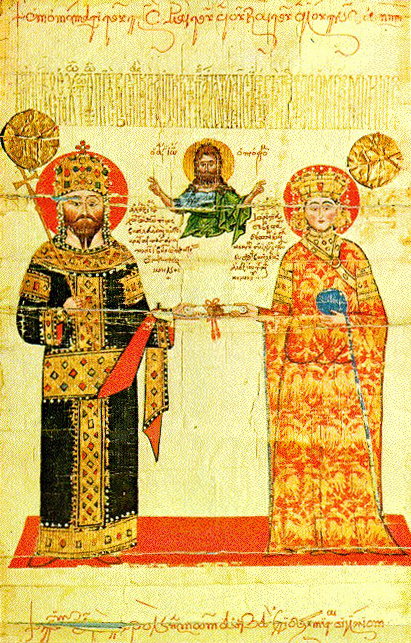
However it was not until the sack of Constantinople by Christian crusaders in 1204 that Trebizond reached its cultural and political zenith, when it became the capitol of a new breakaway Empire of Trebizond declared by the Georgian prince Alexios Komnenos.
Alexios and his queen.
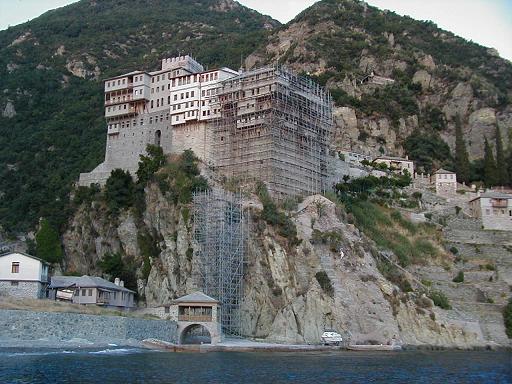
Under Alexios Trebizond developed quite a distinctive regional culture which mingled influences from the Muslim and Byzantine worlds with those from the ancient societies of the Caucasus Mountains. The monasteries built at this time are architectural standouts for their gravity-defying mountaintop construction, and are to me the most distinctive legacy of the empire:
The beautifully-situated Sumela monastery in winter.

A view from a courtyard at Sumela. A frescoed chapel wall is visible to the left.
The castle-like monastery of Dionysiou, greatly enlarged by Alexios.
The Trebizondian Empire actually managed to outlast the Byzantine Empire itself, holding off the Ottomans until 1461, some eight years after the fall of Constantinople. However, it too ultimately fell to the Turks, and the modern day Republic of Turkey, successor to the Ottoman Empire, is where the city lies to this day. The city endures, as it has always done, but the Empire of Trebizond (and the Pontic Kingdom that established its greatness) have faded away.

Some Trebizondian ruins:
A Byzantine hilltop fortress, at left, and at right a Roman-era tomb carved into a cliffside.
A Trebizondian castle and the secret tunnel that connected it to the world.
As an aside, the legends surrounding Mithridates and his poison-resistance gave rise to the substance known as Mithridatium or Mithridate, believed in the early modern period to be one of the most powerful medicines known to man, a universal antidote for all poisons. Interestingly, Mithridatium never had any one common recipe: it was more like a melange of all the most expensive and rare materia medica, from opium and ground pearls to the bones of salamanders and even the ashes of mummies! (On mummy as medicine see my earlier post touching on the subject).

June 12, 2010

Vanished Civilization II: The Tocharians

These people, they said, exceeded the ordinary human height, had flaxen hair, and blue eyes, and made an uncouth sort of noise by way of talking, having no language of their own for the purpose of communicating their thoughts. 

- Pliny the Elder on the report of an embassy from Sri Lanka on the people who live in "Seres" (northwestern China).


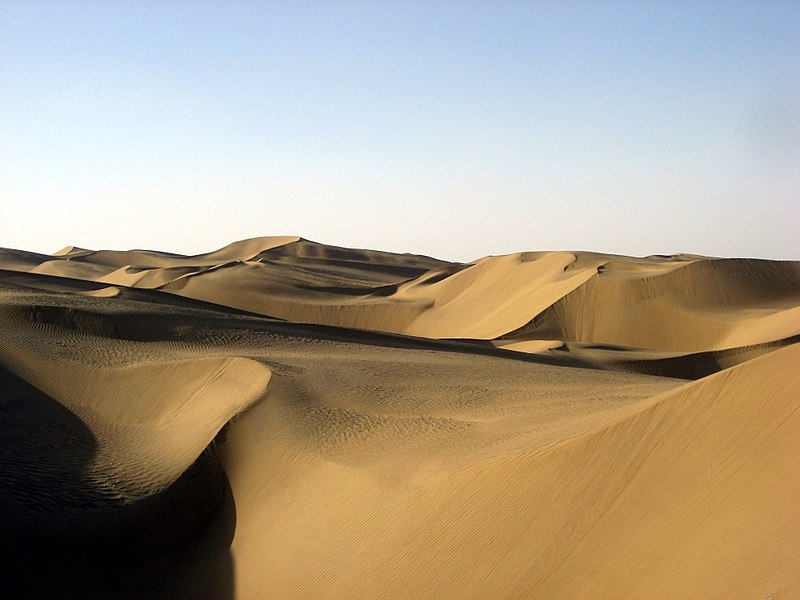
The second installment of an occasional series of posts on my favorite vanished civilizations concerns the Tocharians, a forgotten culture that inhabited what is now far western China from pre-Classical times until the time of Muhammad. Although they were in many ways the progenitors of the Silk Road, the Tocharians remain a most mysterious and poorly understood people. Intriguingly, their language appears to have been a branch of the Indo-European linguistic family that strayed far to the east. Their home, the Tarim Basim, is centered around the forbidding Taklamakan Desert (the name of which can be loosely translated as "place of no return") and was probably one of the last regions of Asia to be inhabited by human beings


The Taklamakan Desert.


NASA satellite image of the Tarim Basin, with the Taklamakan at center. Tocharian settlements generally ranged along the green northern rim.


The hardy souls who settled in this desolate landscape were known variously by their neighbors as the Yuezhi or the Kushans, and appear to have spoken various Tocharian dialects. Although some subsistence agriculture is possible at the margins of the Taklamakan, where rivers flow down from the foothills of the Northern Himalayas before evaporating into the desert, the rather large towns that the Tocharians appear to have inhabited where only possible due to the existence of long-distance trade routes. In short, the Tocharians appear to have been a mercantile people, serving as middle-men between the more advanced civilizations of early imperial China, South Asia, and the Middle East.


6th century AD wooden plates bearing examples of the Tocharian script.

Most of what we know about the Tocharians comes from the accounts of their Turkic and Chinese neighbors to the immediate east and west, but some intriguing archeological finds have complicated the picture. The most fascinating of all is the Tarim mummies. As the picture below shows, these mummies, which appear to date from around 1800 BC at the oldest to 200 AD, are almost uncannily well preserved.


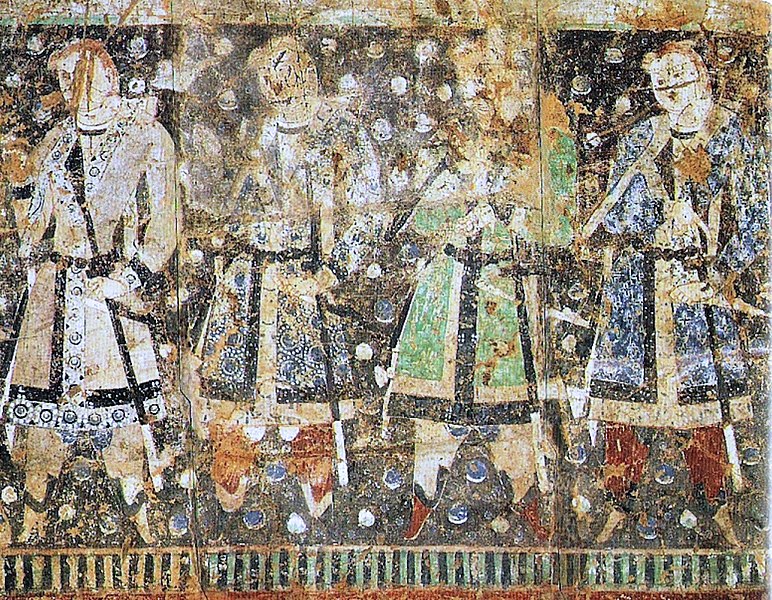
Recent DNA testing on these mummies shows that they bear haplotypes that are typical of West Eurasian peoples, as well as inhabitants of the Indus Valley and Central Asia. This would appear to accord well with what we know of the latter-day Tocharians of the 6th century AD period and beyond, who are depicted in surviving visual sources as looking almost Celtic, with reddish hair and light eyes. Intriguingly, these mummies were wrapped in cloaks made of cashmere and plaid twill!


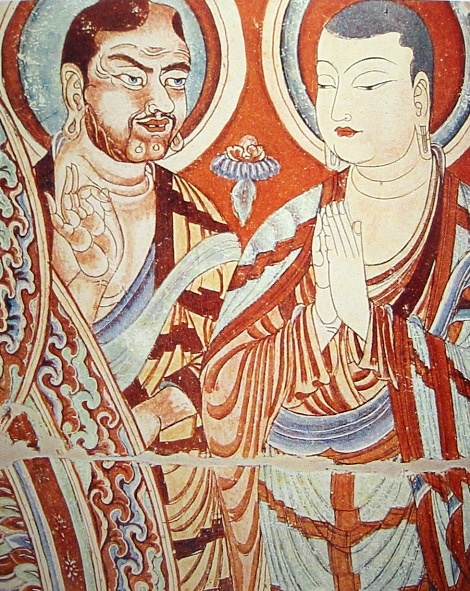
Painting of Buddhist monks from the Eastern Tarim basin, Bezelek, c. 8th century AD, with Tocharian at left.

Further investigation by historical geneticists and archeologists is sure to yield even more fascinating finds. Further reading: the Indiana Jones-era Norwegian explorer Sven Hedin wrote a great travelogue called My Life as an Explorer that deals extensively with his unintential rediscovery of an ancient Silk Road city in the Taklamakan Desert (he fell through an ancient roof covered with sand). There´s also a book exclusively on The Tarim Mummies that promises to have much more detail and images than I was able to present here. 

More on the current controversy over the archeological rediscovery of the Tarim mummies -- and what it means politically in contemporary China -- can be found in this excellent New York Times article from 2008. The political use made of ancient human remains in this instance reminds me of my friend Chris Heaney´s wonderful book Cradle of Gold, which details the controversy surrounding the 1920s adventurer Hiram Bingham´s seizure of Incan bones and other funerary remnants in Machu Picchu (Peru is currently in the midst of suing Yale University to have this archeological heritage returned). Mummies are political!

Signing off from São Paulo!

6th century AD wall fresco from Qizil in the western Tarim basin depicting ´Tocharian donors.

June 2, 2010

Vanished Civilization 1: Carthage

My people shall, by my command, explore
The ports and creeks of ev'ry winding shore...

- Queen Dido in John Dryden's translation of The Aeneid, Bk. I

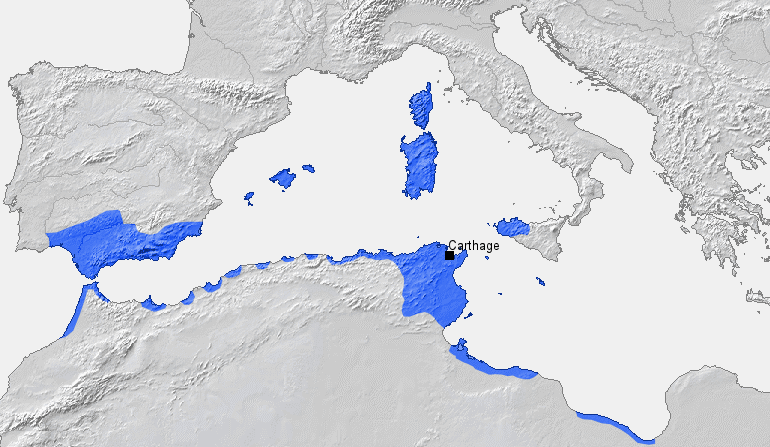
First in a series of once-weekly posts on my favorite vanished civilizations, I present THE CARTHAGINIAN EMPIRE. To understand Carthage, one has first to understand the Phoenicians, who were originally located in what is now Lebanon. The preeminent trading power of the ancient Near East and Mediterranean, the Phoenician city-states of Tyre, Sidon and Biblos (origin of the word 'Bible') sheltered a dynamic merchant community who regularly traveled from Mesopotamia in the East to Cadiz and Cornwall in the West. A Phoenician mariner, Hanno, even sailed as far as Senegal in West Africa, and Herodotus claims that Phoenicians in the employ of an eighth century Egyptian pharaoh successfully circumnavigated Africa, a feat that would not be repeated until the time of Vasco de Gama.

A Phoenician coin featuring a sea monster. c. 600 BC?

Cyrus the Great, Emperor of Persia, ultimately subdued the Phoenician city-states in 539 BC, with the final insult occurring when the supposedly unconquerable island city of Tyre was sacked by Alexander the Great in 332 BC. (Alexander achieved this feat by creating an artificial causeway linking Tyre to the mainland, creating an isthmus that lasts to this day).

 A beautiful Phoenician/Carthaginian sculpture, c. 5th century BC.

The city of Carthage was founded by a mythical ruler known as Pygmalion in the 9th century BC, but it wasn't until these defeats that large numbers of Phoenicians appear to have emigrated to North Africa. The result was a rapid expansion of Carthaginian/Phoenician power into what was effectively a political vacuum in the coastal lands of the Western Mediterranean. Recent genetic testing has shown that one in seventeen inhabitants of southern Europe and North Africa may be directly descended from Phoenician forebears, including up to one half of the population of the island of Malta and a large percentage of Sardinians.

By the third century BC, Carthaginian dominance in the Western Mediterranean was being challenged by an aggressive new power, the Roman Republic. This is by far the best-known period of Carthaginian history, so I'll skip over it here. (For a good overview of the subject see Nigel Bagnall's The Punic Wars.)


Suffice to say, the Carthaginians ultimately lost, and their cities and provinces were devastated by the Romans. Few civilizations have been more thoroughly eradicated. The Roman conquest was so effective that almost everything we know about the Carthaginians today derives from (heavily biased) Roman sources. For instance, it was (and to a degree still is) commonly believed that Carthaginians practiced child sacrifice to the god Ba'al and the goddess Tanit -- a legacy of Roman propaganda that has continued to circulate for over two thousand years.

Fourth century BC Carthaginian coin featuring the goddess Tanit.

As an historian I'm doubtful about these claims because I'm familiar with the degree to which the victor rewrites history, but some archeologists do take them seriously. According to the archeologist Shelby Brown, Carthaginian parents were expected to place their child into the arms of 
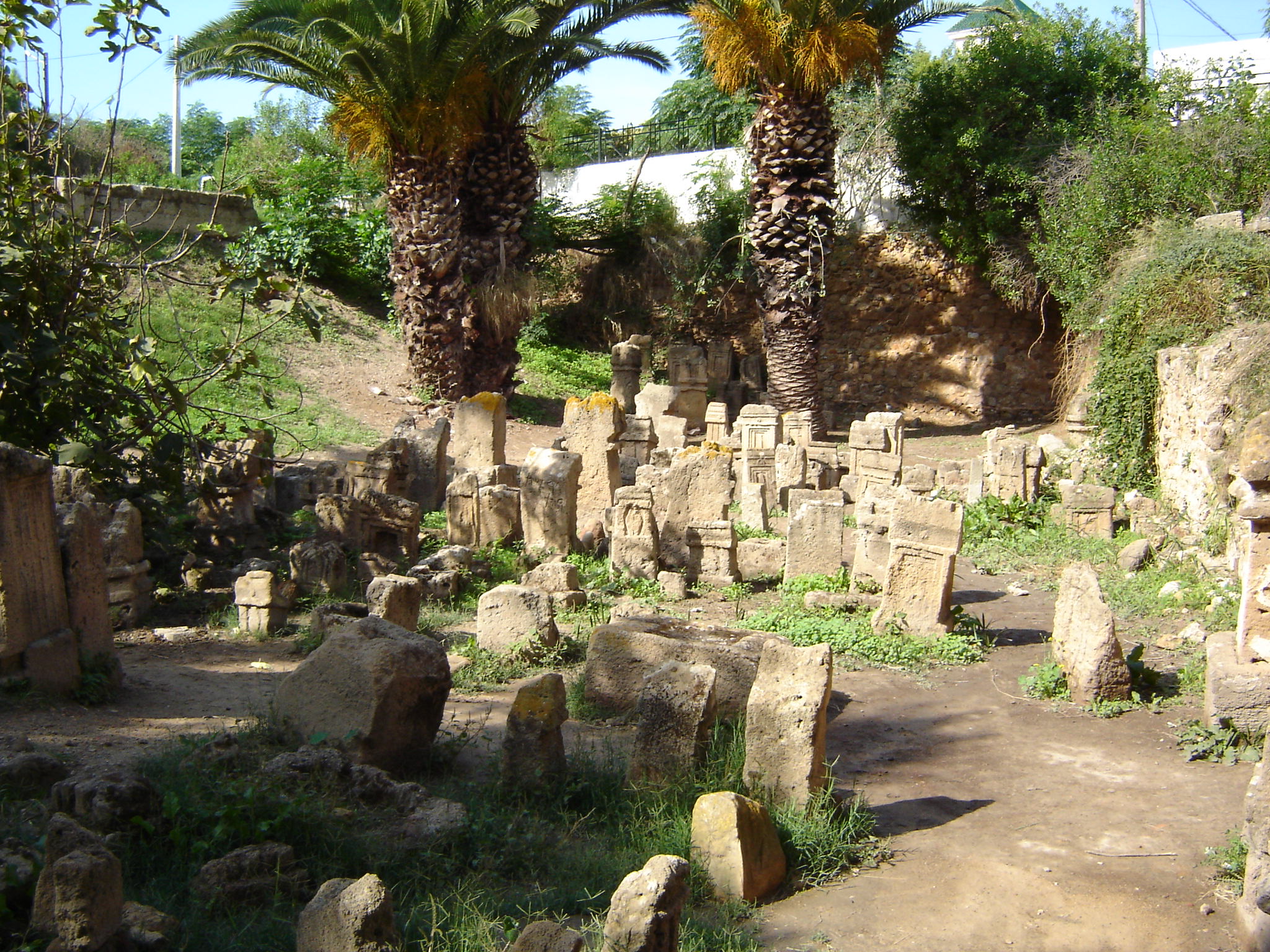
the lady Tanit... The hands of the statue extended over a brazier into which the child fell once the flames had caused the limbs to contract and its mouth to open... The child was alive and conscious when burned... Philo specified that the sacrificed child was best-loved.
 A Carthaginian Tophet, or 'burning place,' the reputed site of human sacrifices.

The fact that we need to appeal to conflicting archeological evidence to reconstruct Carthaginian society points to the degree to which the Romans eradicated Carthaginian literary sources, of which only a handful survive. The survival of even a single Carthaginian library would immeasurably enrich our understanding of ancient history.


Tanit was the preeminent Carthaginian deity, the goddess of motherhood and the moon. Her symbol, above, is probably the most common surviving visual legacy from ancient Carthage, a testimony to a vanished religion and civilization which will probably never be fully understood.


Owing to the paucity of sources, books on Carthage are scarce. Adrian Goldsworthy's  The Fall of Carthage: The Punic Wars, deals mainly with military matters. The best bet for a general overview may be Serge Lancel's Carthage: A History.